


Word Mechanic

Claude Nougaro
Claude Nougaro was a wonderful French lyricist, one of those few authors that make you proud or being Francophone, that give you the motivation to learn new words, explore etymology, forge bold metaphors and make the most of the beautiful language that is French.
In a radio interview he shared a prose that he was particularly fond of:
“Je suis le mecano des mots et l’encre est mon cambouis”
It can be loosely translated to: I am the mechanic of words and ink is my grease. As too often the case a literally translation falls short of capturing the nuance and the texture of the original sentence. It does however illustrates how Nougaro thought about writing, a construction exercise where one pulls from a large bin or cogs, gears, shafts, axles and screws, to build an intricate machine to deliver emotion, sense and rhythm with the help of just enough lube to make it all flow.
This love for language is something that pervades my life and the source of too many debates with my beloved Anglophone wife. I thought I would share with you the words that give me pause, those that unlock ideas and also the funny ones.
Croissant
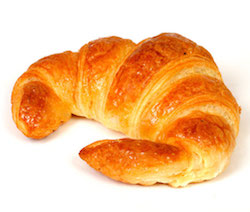 Slap a French name to a random pastry and it would taste instantly better. One such name is “Croissant au chocolat” most commonly used to call a puff pastry wrapped around a stick of chocolate. In French, “Croissant” refers to a shape, one of a crescent, and is used to designate all kinds of crescents, including a moon crescent ou un “Croissant de lune”. It is therefore incorrect to call a “croissant” something that is not a crescent. The correct term is “Pain au chocolat” or bread with chocolate.
For more fun on the topic, I invite you to read the excellent article by Adam Gopnik in the New Yorker: “Straightened out croissant and the decline of civilization”
Oct 11, 2018
Pain
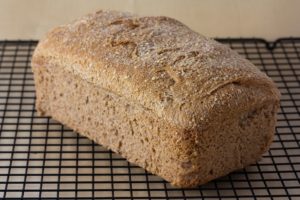 You might have noticed that in my previous post about “Croissant”, I translated the French word “pain” into “bread”. It worth noting, that just like “Croissant’ refers to a shape, so does “pain”, as in “pain de sucre” or “pain de savon”. In this acception “pain” translates into “loaf”.
“Pain” is also used in French slang as in “Tu vas te prendre un pain” meaning “You are going to get punched”. “Pain” is used here metaphorically, the weight of a loaf being compared to a heavy fist.
Oct 14, 2018
Grape
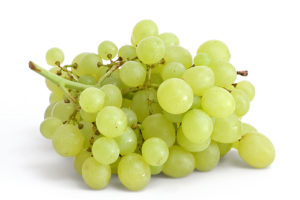 The wonderful semantic drift experienced by the word “grape” as it emigrated from France has, over the years, become my favorite example of sense lost in translation. If you were to ask for “Une grape” at your local French grocery store, you would most likely be met by a perplex stare immediately followed by: “Une grape de quoi?” Meaning a “a grape of what?” At this point you would most likely be thoroughly confused. Let me clarify. Just like “croissant” or “pain” sometimes refer to shapes in French, so does “grape” which literally translates into “cluster”. You are therefore expected to indicate the kind of cluster you are looking for, in the case of grape, what you want is “une grape de raisin” or a grape of raisin.
This is where things get hilarious in English, because raisin refers to dry grape. Whereas in French “raisin” is the actual fruit and “raisin sec” its dried out variant.
To summarize grape translates to “raisin” . Raisin translates to “raisin sec” and cluster translates to “grape”.
Oct 15, 2018
